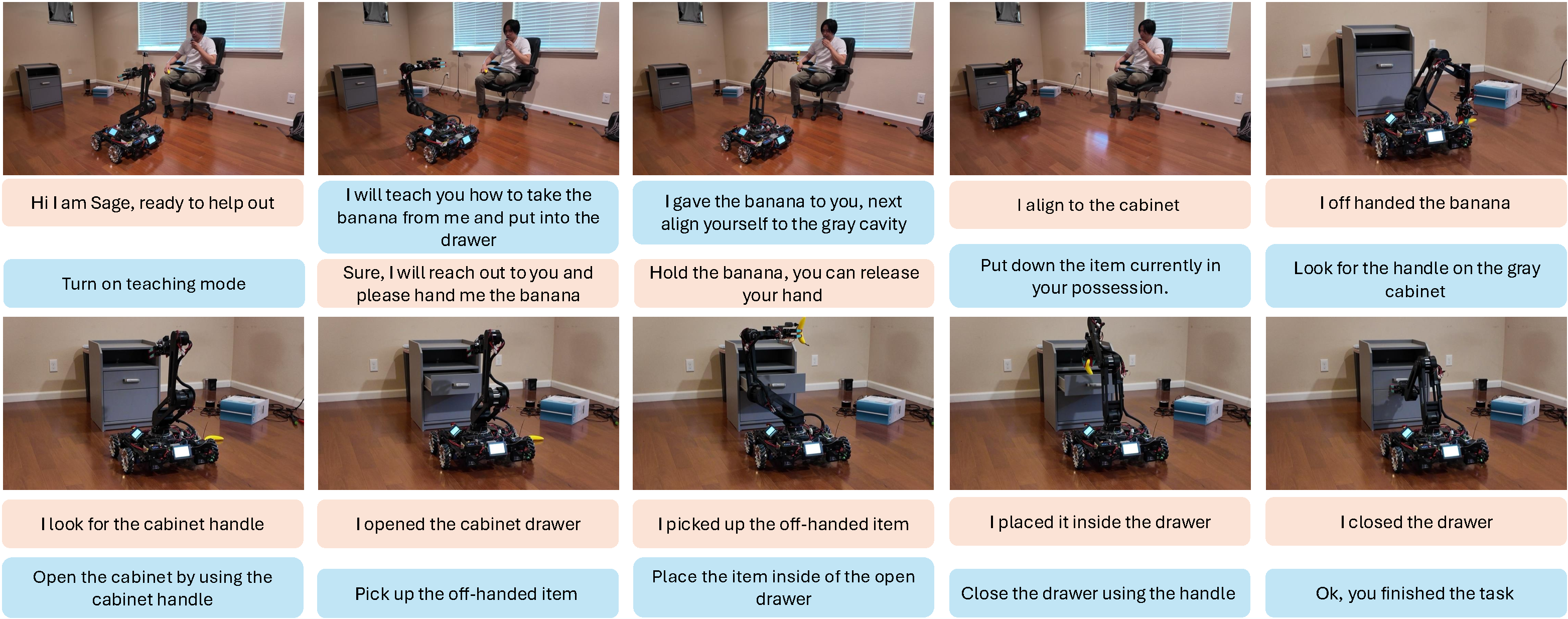
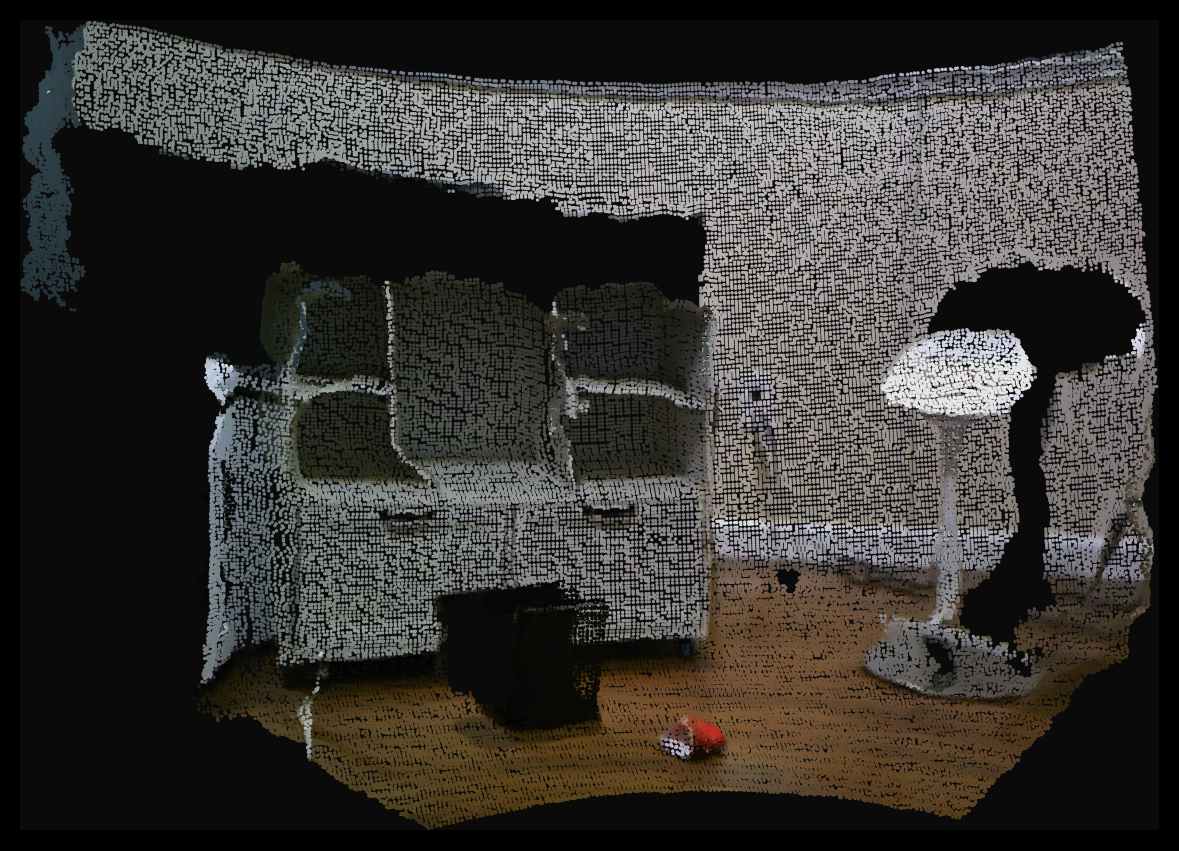
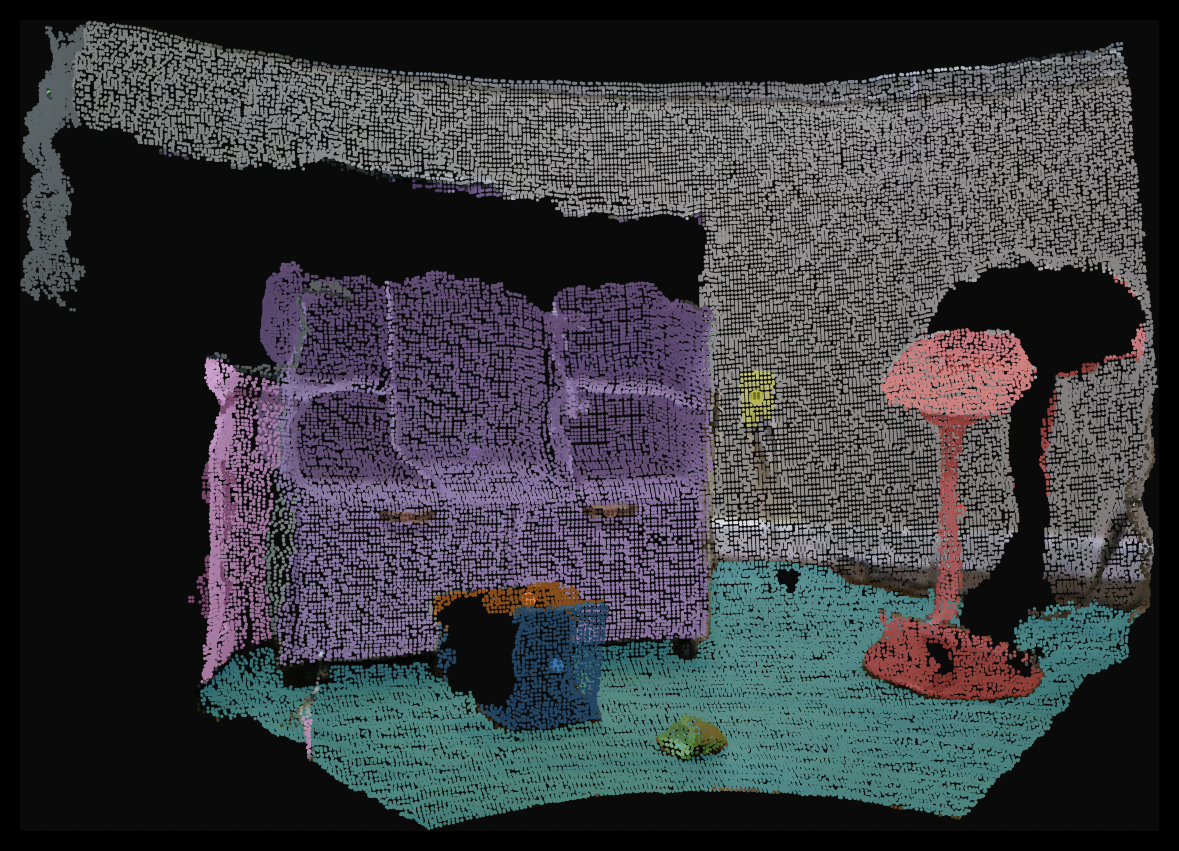
Language agents are capable, conversational partners in software, yet robots still cannot truly interact with the people they serve. The two paradigms that dominate embodied control (end-to-end vision-language-action policies and world-model planners) take an instruction once and rarely talk back, so a person cannot easily tell what the robot understood, redirect it mid-task, or calibrate trust. We argue the bottleneck is less the language interface than representational alignment: a robot tends to interact better when it reasons from a human-centric, object-and-affordance view of the world, compatible with the person's own. We present the World-Cognition Model (WCM), built on the SLAK harness: four decoupled, white-box layers (Sensing/CyberView, Logic, Action, and Knowledge) coordinated by an asynchronous runtime that lets the robot think, talk, and explain while it moves rather than freezing to reason. WCM is designed to support transfer across objects, phrasings, and task compositions by reusing explicit reasoning over grounded objects, affordances, and action primitives. WCM further improves from its own operation: a teacher ensemble turns the robot's successful and failed rollouts into refined chains of thought distilled into a small edge model. In preliminary live trials on a low-cost mobile manipulator, WCM reaches a 73.8% average success rate across nine dialogue-driven interaction tasks.